

+42–45%
In a Swedish study, babies given a planned introduction to vegetables, roots and berries from 4–6 months ate 42–45% more fruit and vegetables at 12 and 18 months.
OTIS study, Umeå University (Johansson et al. 2023)

for babies 4-12 months
What babies taste early affects what they like later. Babies are born liking sweet, but vegetables take practice. The first months of eating are the easiest time to learn. The Taste Intro Kit contains the bitter and sour flavours they need and a 30-day plan to follow.
Delivered frozen in the Stockholm region. Orders ship from 1st of November
Our first product
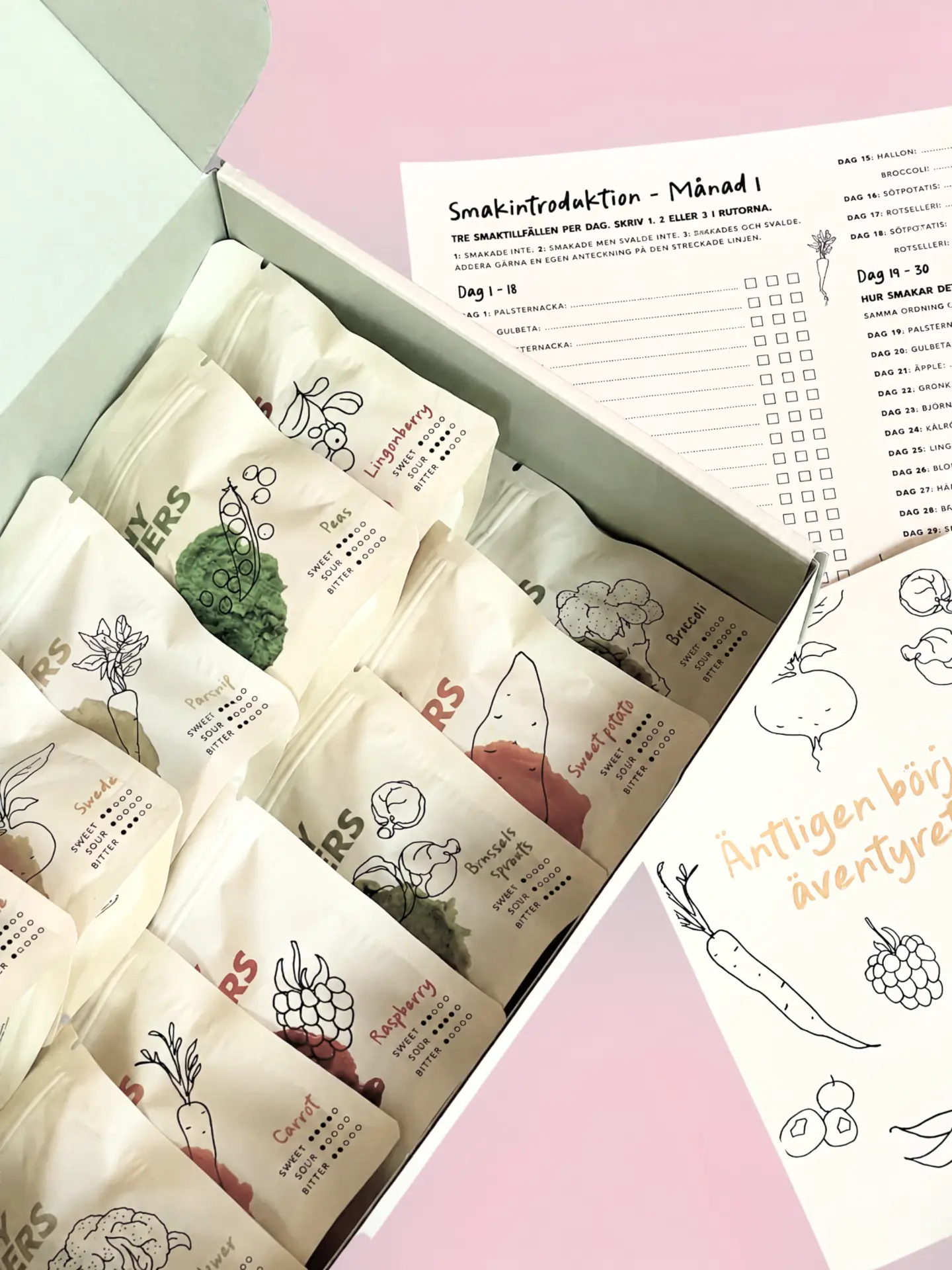
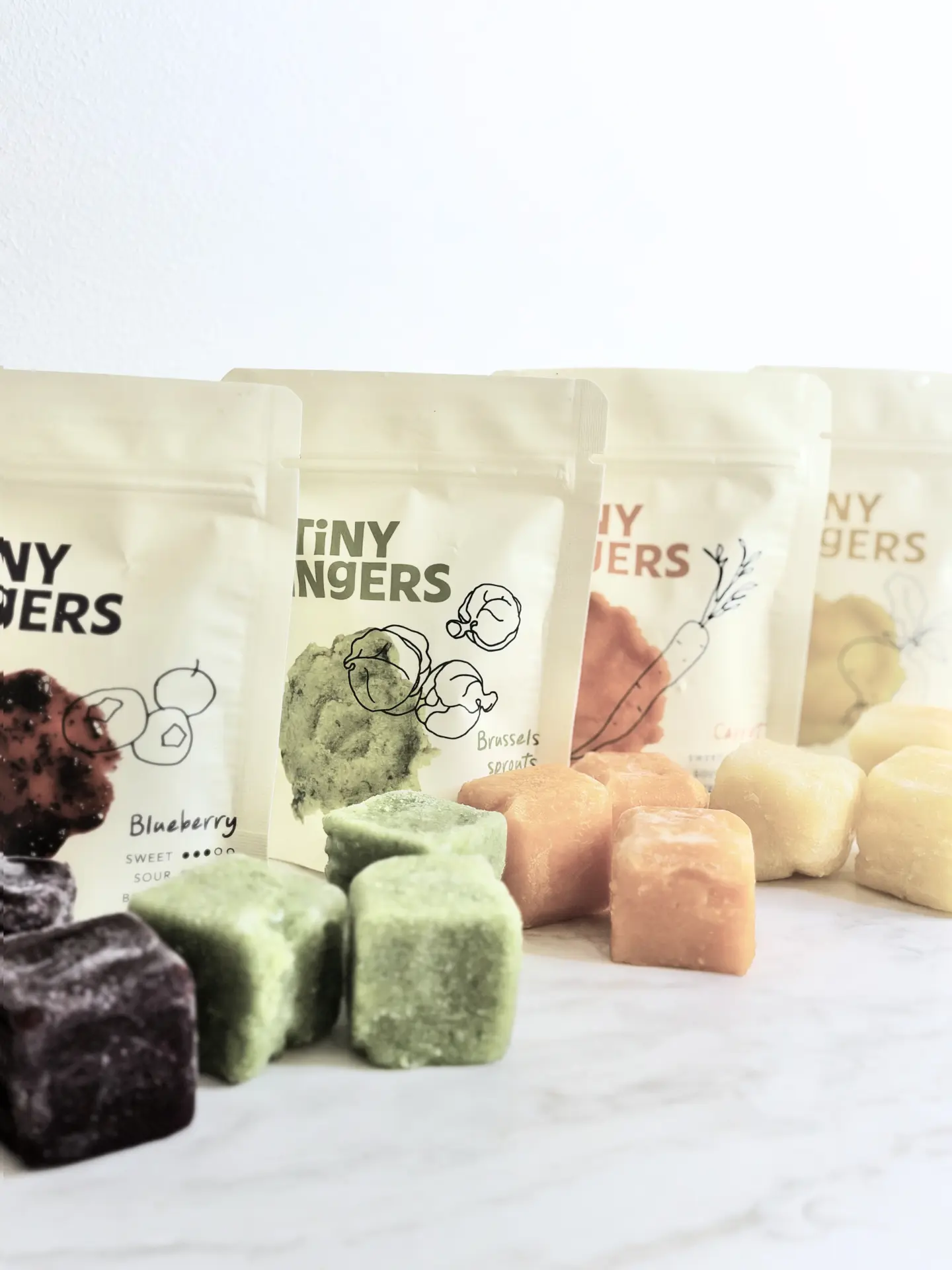
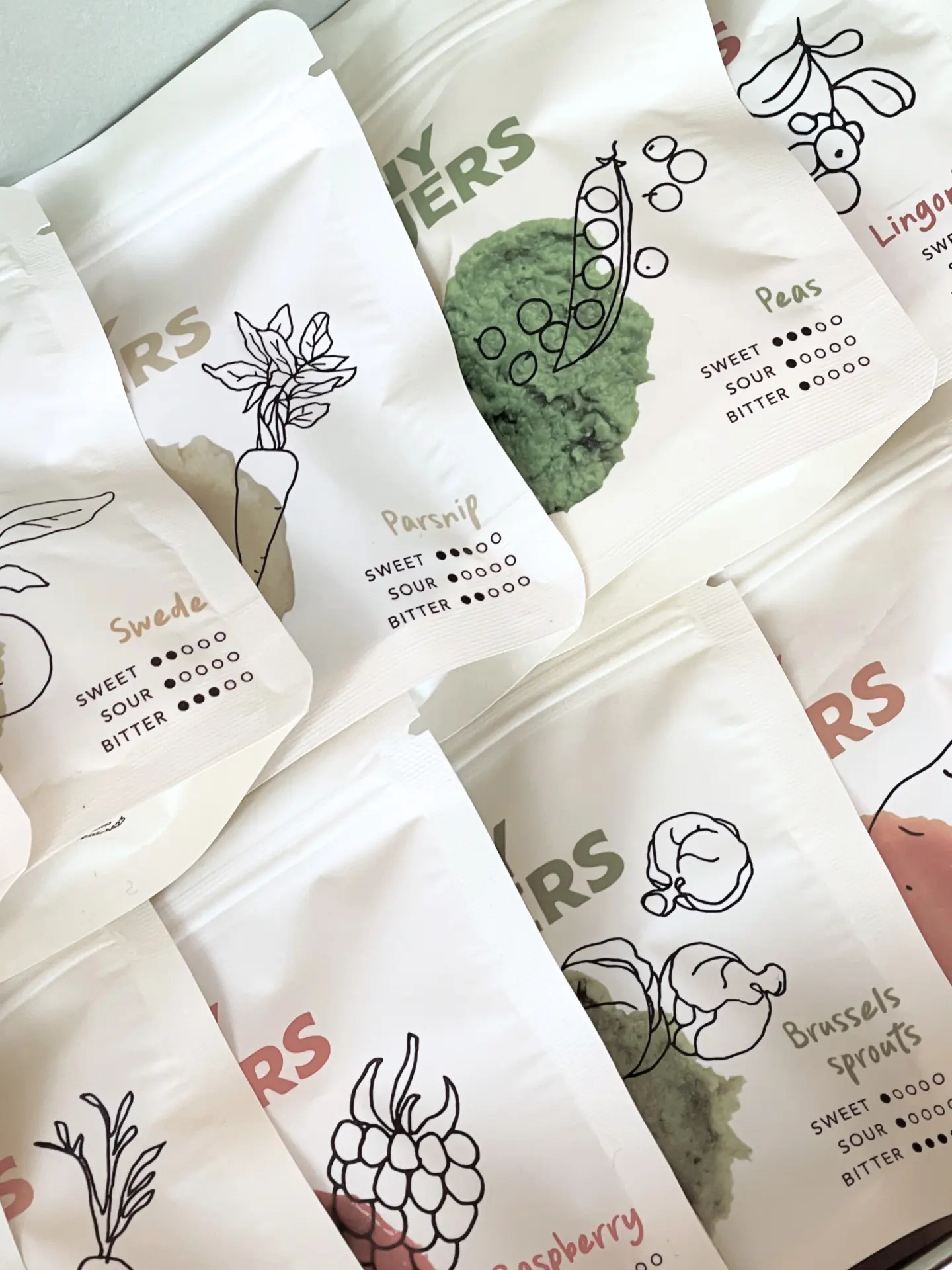
A month of flavour introduction, planned out. Mostly bitter and sour vegetables and berries chosen for the flavours babies need practice with.
Single-ingredient purées for 30 days of taste portions · Sour & bitter flavours · Organic ingredients
Tick off one taste a day and see the progress.
The textured head that holds the purée, helps baby dip on their own.
A deep pocket catches what falls. Food-safe soft silicone (LFGB-certified)
All you need to know about early food introduction and flavour learning.
A few minutes a day. Thaw a cube, offer a tiny taste, tick it off.
For babies 4–12 months.
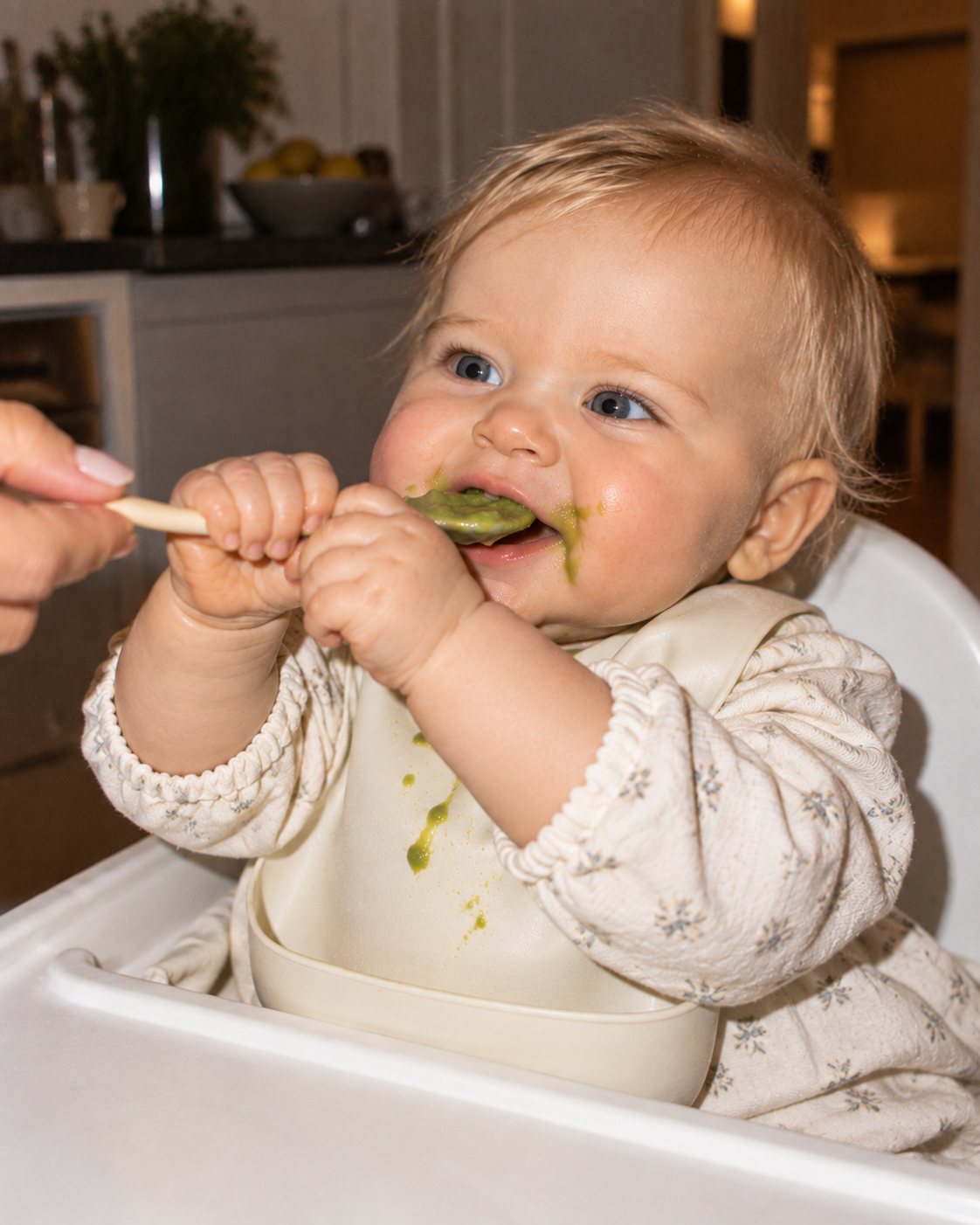
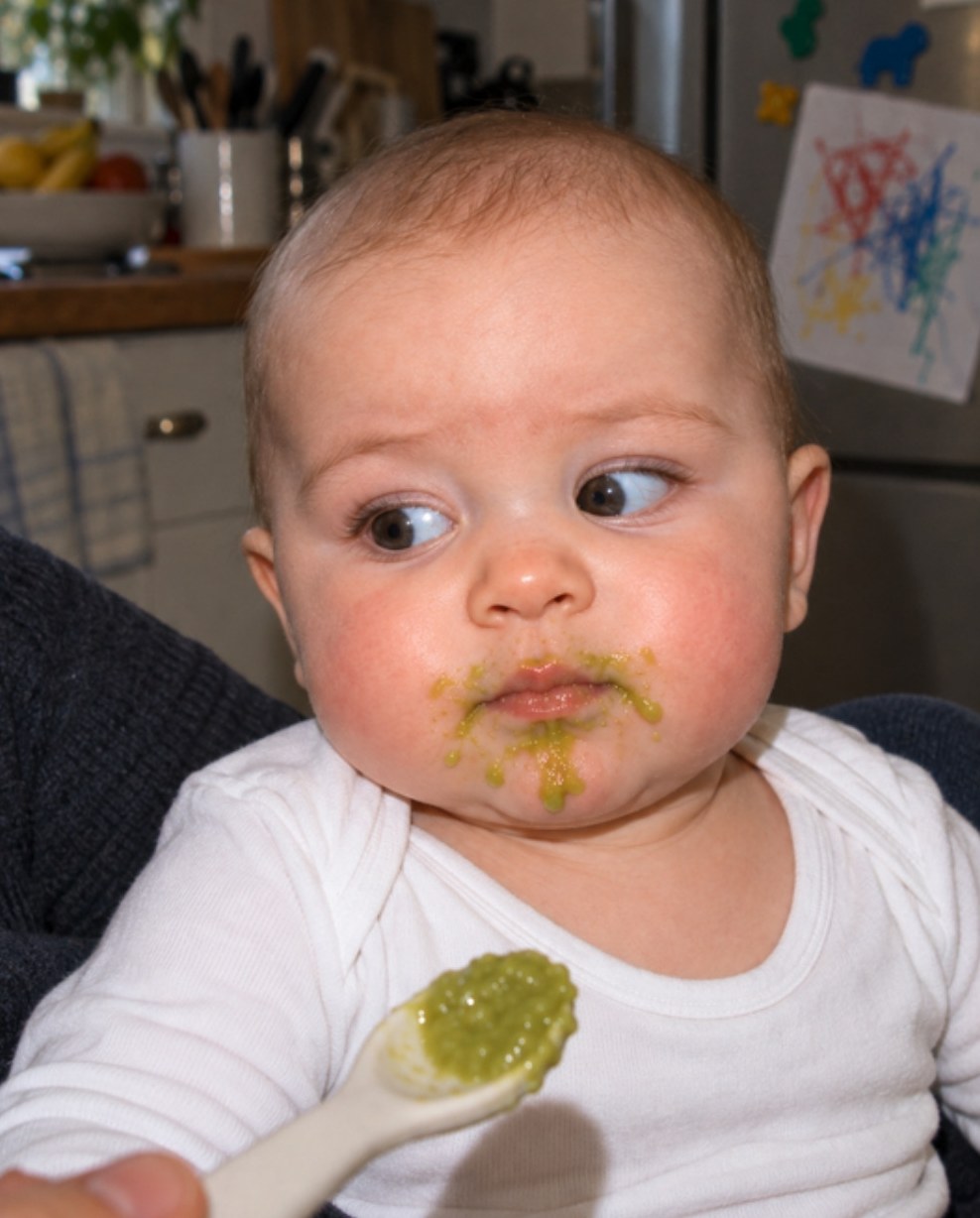
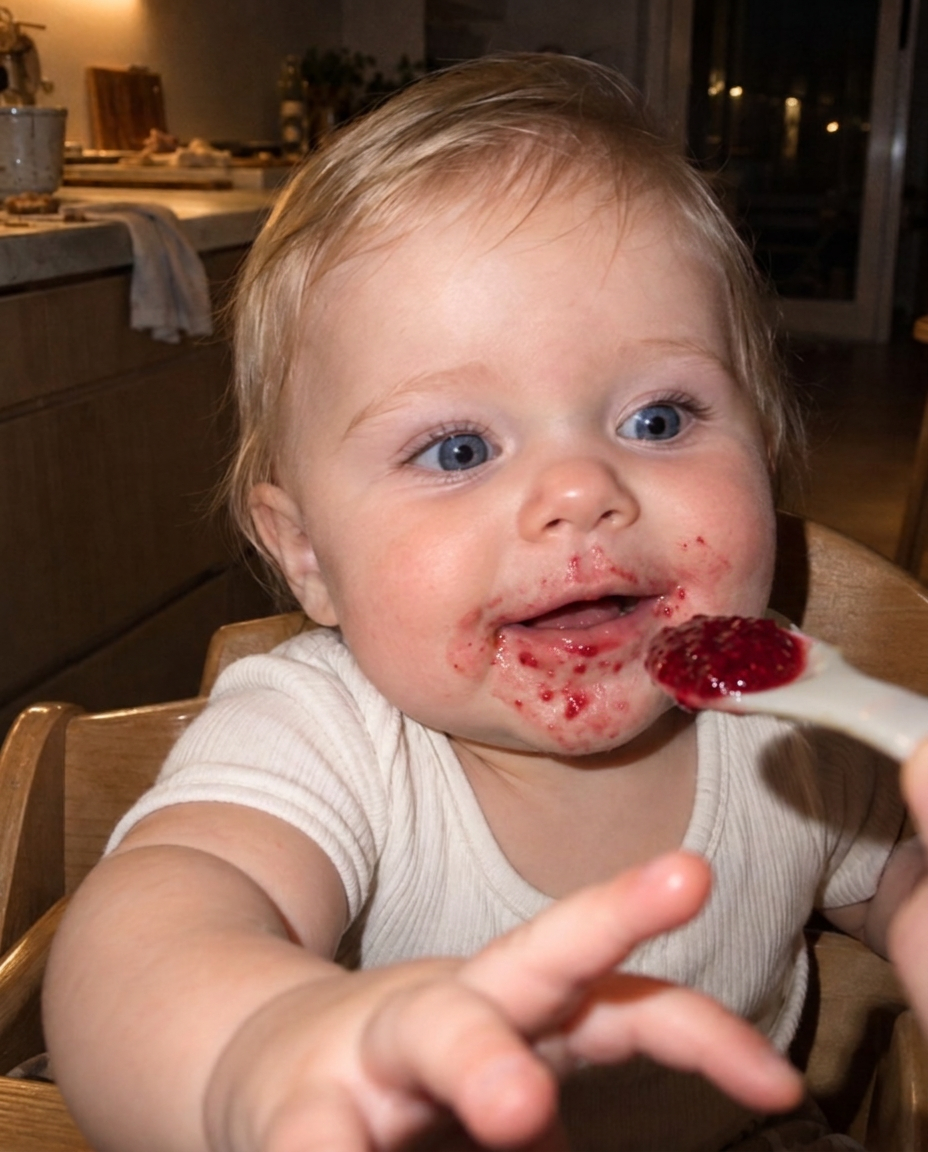
Some faces will be spectacular. That's the point: a scrunched face isn't rejection, it's learning.
Month 1 for 899 kr
Shop the kitBuilt on research
Every flavour and every day of the plan follows what studies show about early flavour learning. It starts with milder sour and bitter flavours and moves to stronger ones step by step.

Taste can be learned
Rhubarb
+42–45%
In a Swedish study, babies given a planned introduction to vegetables, roots and berries from 4–6 months ate 42–45% more fruit and vegetables at 12 and 18 months.
OTIS study, Umeå University (Johansson et al. 2023)
3×
In an American study, babies who tasted green beans 8 days in a row ended up eating almost three times as much.
Forestell & Mennella 2007